
 Español
 English
 Português PT
 Italiano
 Français
 Deutsch
 14 Days Return
Simple and fast returns management so you can shop with complete confidence.
 Free shipping
On orders over €99
 Technical Advice
Unsure about the replacement part? Contact us via WhatsApp and we'll verify the exact part for you.
 100% Secure Payment
Transactions are protected with SSL and HTTPS encryption. Shop with complete peace of mind.
Function and technical context
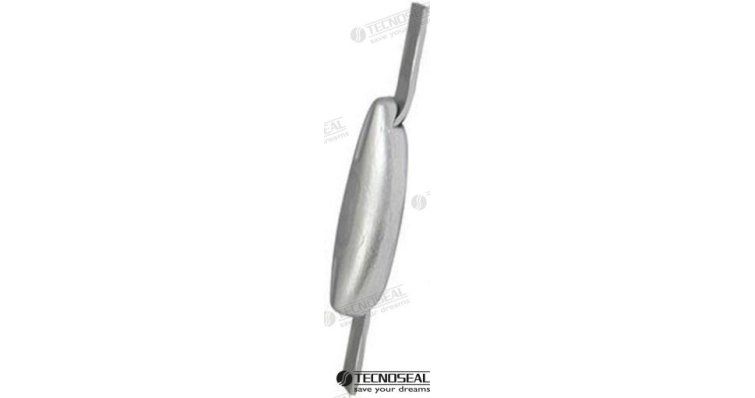
Fish-shaped sacrificial anodes constitute the main passive cathodic protection system for the hull and submerged metal elements of a vessel. Made of high-purity zinc, they act as a galvanic anode as it is a more electropositive metal than the steel, aluminum or bronze used in propellers, shafts, rudders and bottom holes. By electrochemically polarizing with respect to the structures they protect, they are the ones who corrode in a controlled manner instead of the structural components of the vessel, avoiding galvanic corrosion and electrolysis. Its flat and elongated geometry, characteristic of the "fish" shape, facilitates the uniform distribution of the protective current over extensive hull surfaces, being especially suitable for installations on keels, flat bottoms and skids of motor or sailing boats that operate in salt or brackish water.
When to replace this part?
The clearest sign that a sacrificial anode needs to be replaced is the loss of between 50% and 75% of its mass: when the zinc core shows cavities, widespread surface cracks or a visible reduction in section, it has stopped offering effective protection. As a preventive maintenance standard, hull anodes should be inspected at each docking and replaced at least once a season, or sooner if the vessel is moored in ports with high electrical activity or stray currents. Renewing the anode at the beginning of each nautical season is the most economical measure to avoid damage due to corrosion in propellers, shafts and hulls, breakdowns that can multiply the cost of this simple preventive operation several times.
| Marca / Motor | Observaciones |
|---|---|
| No se han proporcionado datos de compatibilidad específica para este ánodo. Al tratarse de un ánodo de casco de uso universal, consulte con su técnico naval la idoneidad según el material y la superficie a proteger. | |
