
 Español
 English
 Português PT
 Italiano
 Français
 Deutsch

 14 Days Return
Simple and fast returns management so you can shop with complete confidence.
 Free shipping
On orders over €99
 Technical Advice
Unsure about the replacement part? Contact us via WhatsApp and we'll verify the exact part for you.
 100% Secure Payment
Transactions are protected with SSL and HTTPS encryption. Shop with complete peace of mind.
Function and technical context
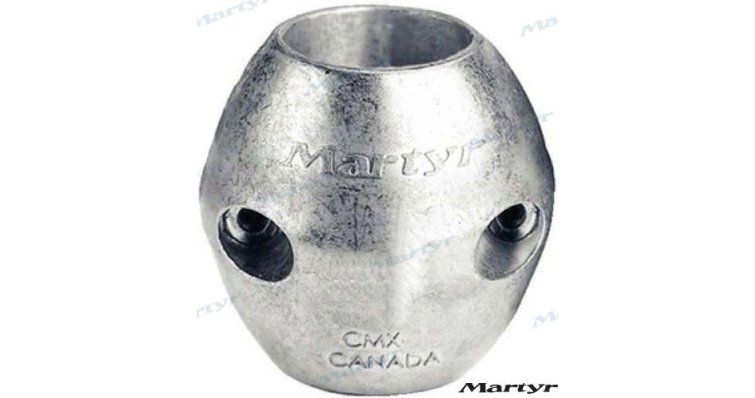
The shaft anode is a cathodic protection element that is installed directly on the boat's drive shaft, acting as a sacrificial metal to protect the shaft, propeller and other submerged metal components from galvanic corrosion. It works in the underwater transmission system, where the presence of salt or brackish water creates ideal conditions for the generation of galvanic currents between different metals. Being the most electrochemically active metal of the assembly, the anode corrodes in a controlled manner instead of allowing the stainless steel or bronze shaft to do so, avoiding structural damage to elements of much higher cost. Proper installation ensures the mechanical integrity of the drive train and extends the life of the propeller and stern bearings.
When to replace this part?
Shaft anodes should be inspected at least once a season, generally during the annual docking: when the anode has lost approximately 50% of its mass or has an irregular and severely eroded surface, it is essential to replace it before launching the boat again. An overconsumed anode leaves the shaft and propeller unprotected, which can lead to corrosion pitting, stern tube bearing deterioration, and, in severe cases, structural weakening of the shaft itself. Preventative replacement with each boating season is the practice recommended by marine mechanics to avoid costly drivetrain breakdowns.
| Aplicación | Observaciones |
|---|---|
| Ejes de transmisión de 5-1/2 pulgadas de diámetro | Verificar el diámetro exacto del eje antes de la instalación |
| Embarcaciones con eje de cola en agua salada o salobre | Protección catódica en ambientes marinos |
