
 Español
 English
 Português PT
 Italiano
 Français
 Deutsch
 14 Days Return
Simple and fast returns management so you can shop with complete confidence.
 Free shipping
On orders over €99
 Technical Advice
Unsure about the replacement part? Contact us via WhatsApp and we'll verify the exact part for you.
 100% Secure Payment
Transactions are protected with SSL and HTTPS encryption. Shop with complete peace of mind.
Function and technical context
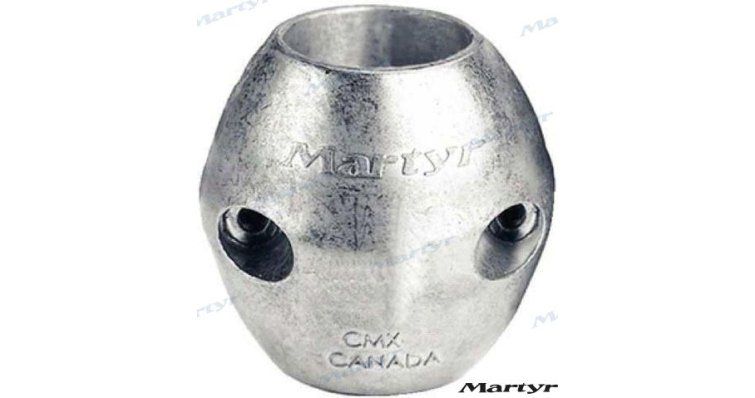
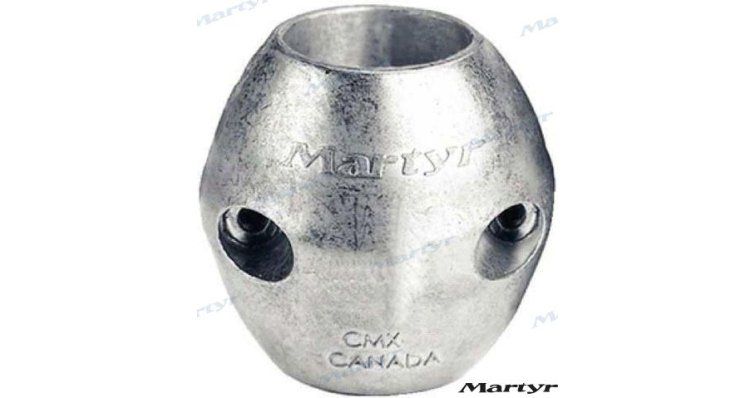
Shaft anodes are cathodic protection elements designed to be installed directly on the boat's propulsion shaft, acting as a sacrificial metal that attracts electrolytic corrosion before it affects more expensive structural components such as the shaft itself, the propeller hub or the support bearings. This aluminum anode for a 3-inch shaft (reference CMX-13A) works in the submerged propulsion system, forming part of the shaft line that connects the motor with the propeller. The aluminum alloy composition makes it especially suitable for navigation in salty and brackish waters, offering greater galvanic efficiency compared to zinc anodes in certain conditions of medium salinity, and being more respectful of the marine environment as it lacks cadmium in its formulation. Without cathodic protection in good condition, galvanic corrosion can deteriorate the stainless steel or bronze shaft silently and progressively, compromising the structural integrity of the transmission and leading to high-cost repairs.
When to replace this part?
The clearest symptom that a shaft anode has exhausted its useful life is visible mass loss: when the anode has consumed more than 50% of its volume, it has stopped protecting effectively and must be replaced immediately. The aluminum shaft anodes should be inspected at least once a season—ideally at each grounding or hull inspection—and replaced preventively at the beginning of each sailing season or when they show wear greater than half their size. Renewing the shaft anode regularly is the most economical maintenance measure to avoid degradation of the propulsion shaft, a component whose replacement or repair can involve an outlay much higher than the cost of a simple sacrificial part.
| Tipo de aplicación | Diámetro de eje | Material | Uso recomendado |
|---|---|---|---|
| Eje de propulsión naval | 3 pulgadas (aprox. 76,2 mm) | Aleación de aluminio | Aguas saladas y salobres |
