
 Español
 English
 Português PT
 Italiano
 Français
 Deutsch
 14 Days Return
Simple and fast returns management so you can shop with complete confidence.
 Free shipping
On orders over €99
 Technical Advice
Unsure about the replacement part? Contact us via WhatsApp and we'll verify the exact part for you.
 100% Secure Payment
Transactions are protected with SSL and HTTPS encryption. Shop with complete peace of mind.
Function and technical context
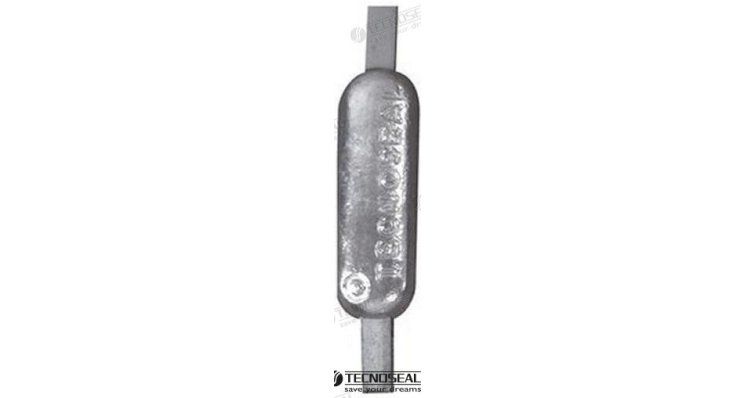
Sacrificial anodes in the naval sector are essential cathodic protection elements for any vessel exposed to aquatic environments with electrolytic potential. Its mission is to oxidize in a controlled manner instead of the metallic components of greatest structural value—propellers, shafts, rudders, keels and hulls—acting as an electrochemical barrier against galvanic corrosion. This type of anode in sector format is designed to be fixed in specific areas of the hull or stern where the curved or irregular geometry requires an adapted protective coverage, guaranteeing continuous electrical contact with the metal structure of the boat. Without cathodic protection that is correctly sized and in good condition, submerged metals suffer accelerated degradation that can compromise the structural integrity of the vessel and lead to costly or even dangerous breakdowns during navigation.
When to replace this part?
The clearest sign that a sacrificial anode needs to be replaced is the visible loss of mass: when the anode has consumed between 50% and 60% of its initial volume, it no longer offers sufficient protection and must be replaced before the components it protects begin to corrode. Checking the condition of the anodes should be carried out at least once a season, ideally during the annual beaching of the boat, although in areas of salt water with high conductivity or on boats with on-board electrical installations prone to stray currents it may be necessary to inspect them more frequently. Replacing the anode preventively at the beginning of each season is the most recommended practice by naval mechanics, since the cost of a new anode is minimal compared to repairing or replacing a shaft, propeller or area of the hull damaged by galvanic corrosion.
| Marca / Sistema | Aplicación |
|---|---|
| Sector Naval (uso general) | Protección catódica de cascos, ejes, timones y apéndices metálicos en embarcaciones de uso marino |
